---
title: Track engagement, conversions and revenue
description: Learn to measure the real impact of your content by tracking engagement, conversions, and generated revenue. Centralize your data in Semji to identify your most profitable content, optimize underperforming content, and concretely demonstrate the ROI of your content strategy.
---
[Skip to content](https://help.semji.com/en/guide-4-track-engagement-conversions-and-revenue#main-content)
- [English](https://help.semji.com/en/guide-4-track-engagement-conversions-and-revenue)
- [Français](https://help.semji.com/fr/guide-4-suivre-lengagement-les-conversions-et-les-revenus)
English
Show submenu for translations

Open main navigation
Close main navigation
- - [English](https://help.semji.com/en/guide-4-track-engagement-conversions-and-revenue)
- [Français](https://help.semji.com/fr/guide-4-suivre-lengagement-les-conversions-et-les-revenus)
English
Show submenu for translations
- Contact us
Contact us
How can we help you?
- There are no suggestions because the search field is empty.
1. [Help Center](https://help.semji.com/en?hsLang=en)
2. [Track and analyze your performance](https://help.semji.com/en/track-and-analyze-your-performance?hsLang=en)
3. [Managing your SEO performance](https://help.semji.com/en/track-and-analyze-your-performance?hsLang=en#managing-your-seo-performance)
# Track engagement, conversions and revenue
## Learn to measure the real impact of your content by tracking engagement, conversions, and generated revenue. Centralize your data in Semji to identify your most profitable content, optimize underperforming content, and concretely demonstrate the ROI of your content strategy.
[In summary](https://help.semji.com/en/guide-4-track-engagement-conversions-and-revenue#summary)
[What this changes for you](https://help.semji.com/en/guide-4-track-engagement-conversions-and-revenue#whatthischanges)
[Traffic, Engagement, and Conversion Analysis](https://help.semji.com/en/guide-4-track-engagement-conversions-and-revenue#traffic)
[Use case: Identify your best-performing content for conversion](https://help.semji.com/en/guide-4-track-engagement-conversions-and-revenue#usecase)
[FAQ](https://help.semji.com/en/guide-4-track-engagement-conversions-and-revenue#FAQ)
[Measure the complete ROI of your content strategy](https://help.semji.com/en/guide-4-track-engagement-conversions-and-revenue#measure)
### In summary
**What you can do**: Measure the business impact of your content by tracking visitor engagement, conversions and the revenue generated to prove the ROI of your content strategy
**For whom**: Content managers, marketing managers and executives who want to demonstrate the commercial value of their content beyond simple traffic
**Why it's useful**: Turn your vanity metrics into concrete business indicators to justify your content investments and identify your most profitable content
### What this changes for you
Generating traffic is good. But converting those visitors into prospects, customers or subscribers is better! How do you know if your content truly engages your audience and contributes concretely to your business objectives?
Navigating between Google Analytics for conversions, your CRM for leads, and your e-commerce dashboards to measure the overall impact of your content complicates ROI analysis. Even more difficult: precisely identifying which content generates the most value.
Semji centralizes your engagement and conversion metrics in a unified view. Sessions, visit duration, conversions, revenue... you finally measure the complete impact of your content strategy.
**Concrete result**: you identify your most profitable content, optimize underperforming content, and clearly demonstrate the business value of your work.
### Traffic, Engagement, and Conversion Analysis
#### Step 1: Analyze traffic and visitor engagement
First step: understand how your visitors interact with your content. In the "Traffic & Engagement" section, you access the metrics that reveal the quality of the user experience.
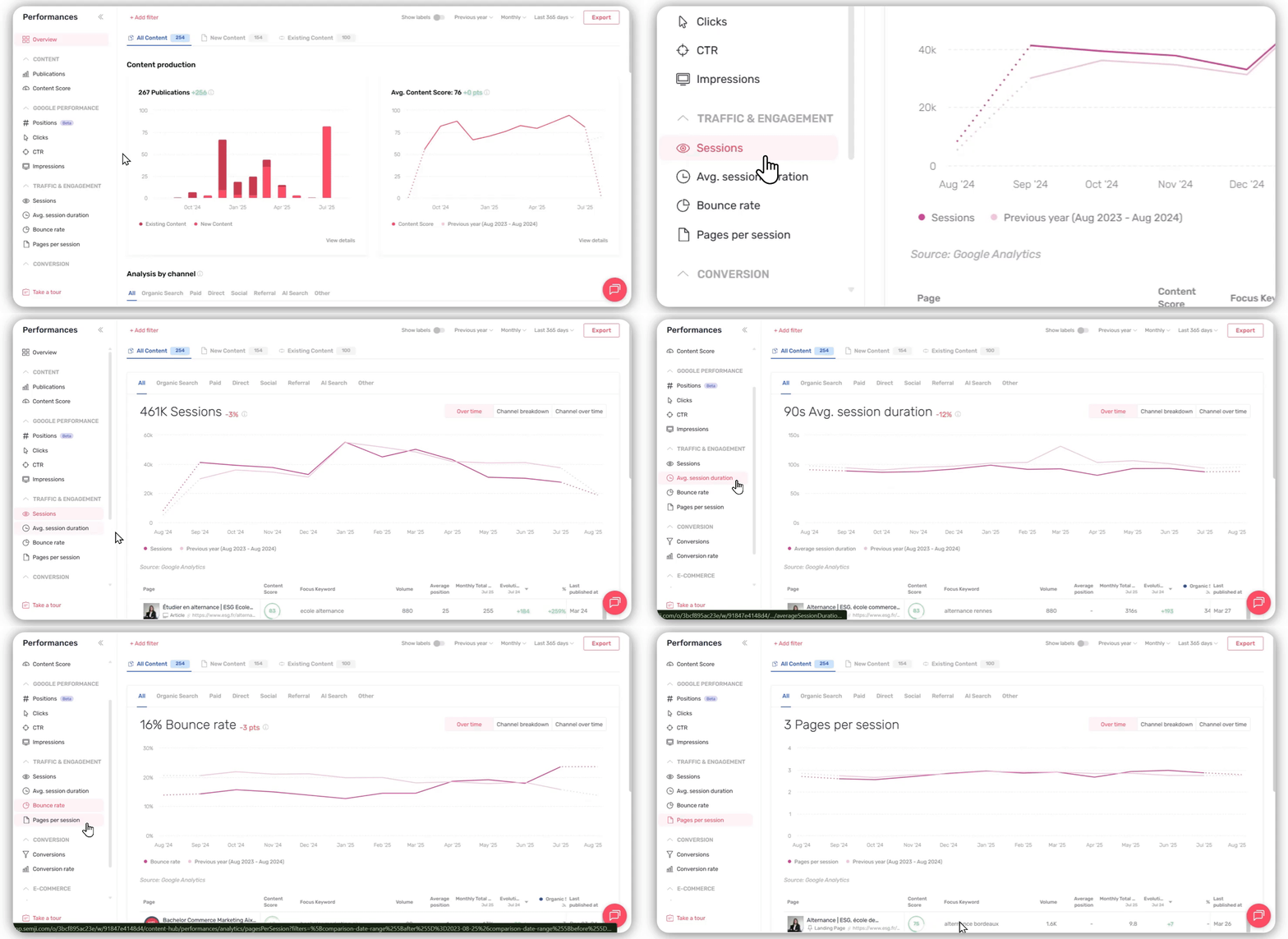
**Why these metrics are crucial:** Engagement precedes conversion. A visitor who spends time on your site and explores multiple pages is more likely to take action. These indicators reveal whether your content truly captures attention.
**Essential engagement metrics:**
**Sessions:** Total number of visits to your content. This metric measures your ability to attract qualified traffic to your strategic pages.
**Average session duration:** Average time spent per visit. A long duration (more than 2 minutes) indicates engaging content that retains attention and builds trust.
**Bounce rate:** Percentage of visitors who leave after viewing only one page. A low bounce rate (below 50%) indicates content that encourages exploration and keep visitors engaged.
**Pages per session:** Average number of pages viewed per visit. This metric reveals the curiosity generated by your content and the effectiveness of your internal linking.
#### Step 2: Measure your content conversions
Analyze your business objectives. The "Conversion" section reveals how your content concretely contributes to your marketing and commercial objectives.
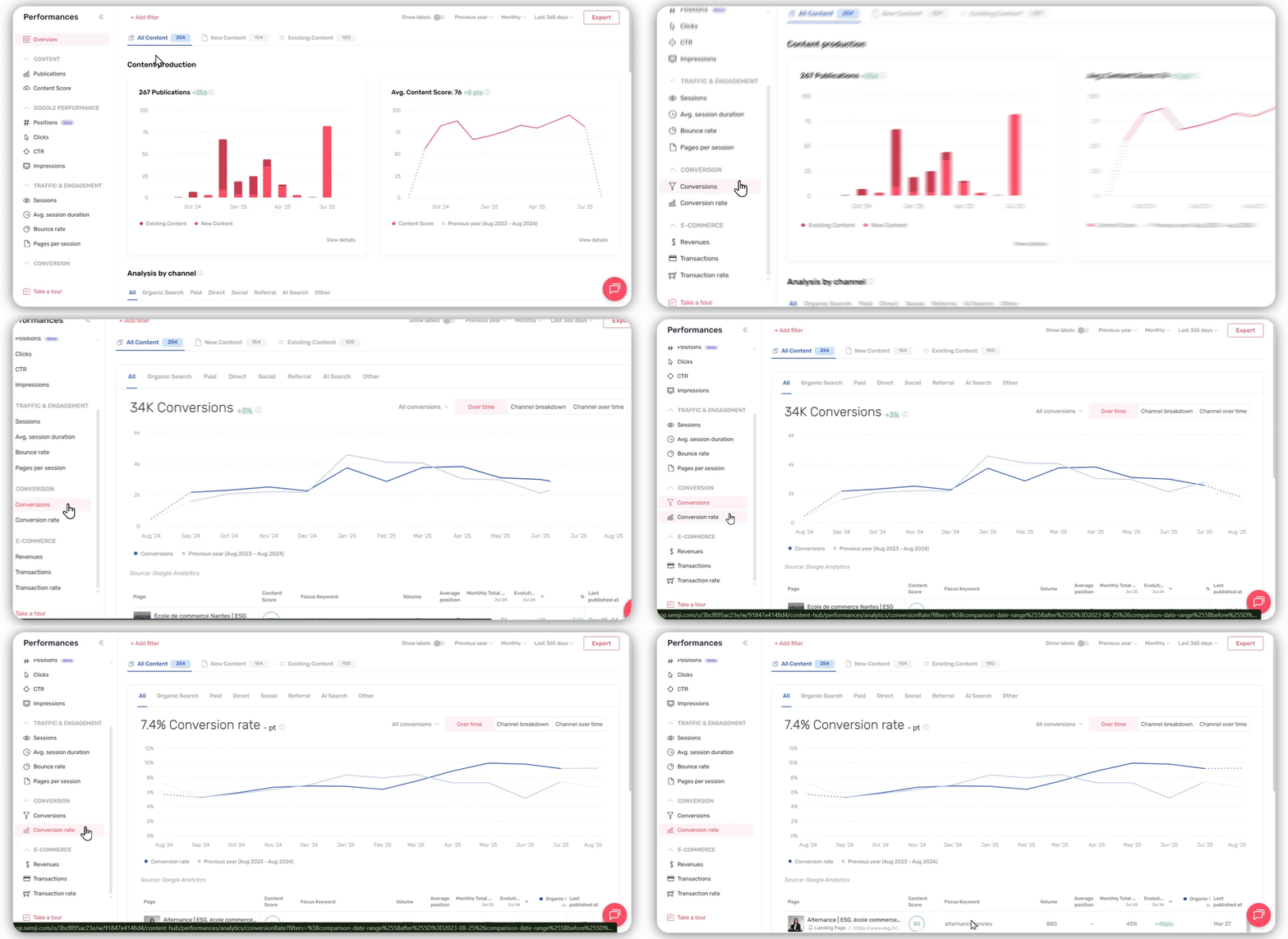
**Important prerequisite:** This data comes from objectives configured in Google Analytics. Make sure you have defined your priority conversions: newsletter subscriptions, resource downloads, quote requests, appointment bookings...
**Key conversion metrics:**
**Conversions:** Total number of important actions completed by your visitors. This metric directly measures the effectiveness of your content in converting visitors into prospects or customers.
**Conversion rate:** Percentage of visitors who perform a desired action. A good conversion rate (2-5% depending on your sector) indicates persuasive content and well optimized user journeys.
**Examples of conversions to track:**
- Newsletter subscription
- White paper or guide download
- Product demonstration request
- Sales appointment booking
- Webinar registration
**Comparative analysis:** Use time filters to compare your conversion performance across different periods and identify your improvement trends.
#### Step 3: Track e-commerce impact and revenue
Measure direct profitability. If you sell online, the "E-commerce" section reveals the exact financial contribution of your content to your revenue.
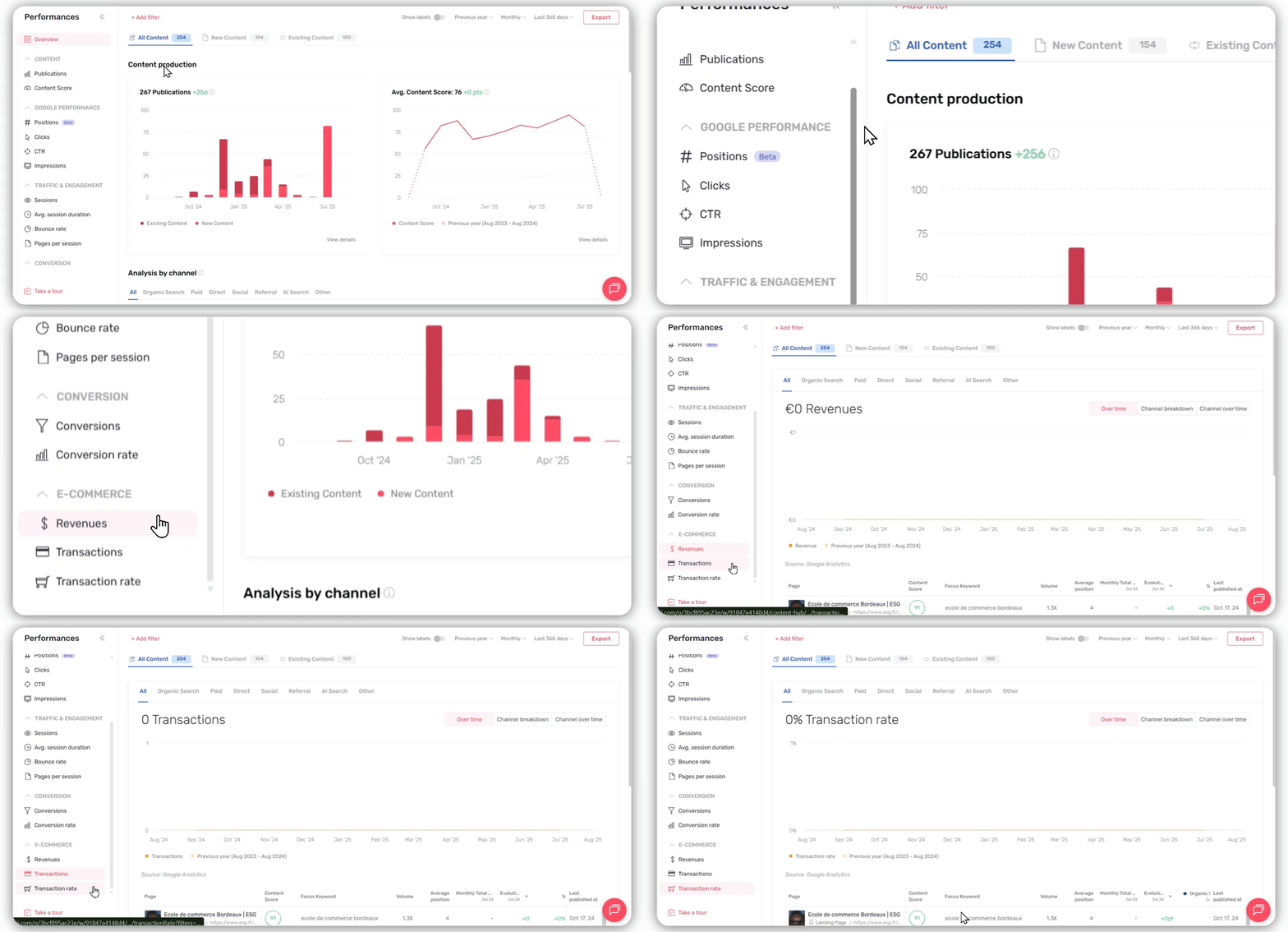
**Strategic e-commerce metrics:**
**Revenue:** Total amount of sales generated through your content. This ultimate metric allows you to precisely calculate the ROI of your content strategy.
**Transactions:** Total number of completed orders. This metric reveals your ability to transform readers into effective buyers.
**Transaction rate:** Percentage of sessions that result in a purchase. This metric measures the commercial effectiveness of your content and the optimization of your conversion funnels.
**Content ROI calculation:** Divide the revenue generated by your content production costs (time, tools, service providers) to obtain your return on investment (ROI).
### Use case: Identify your best-performing content for conversion
**Concrete scenario:** You want to optimize your content promotion budget by identifying your most profitable articles to focus your efforts on what works.
**4-step method:**
1. **Access the detailed table**: Click on "Conversions" in the left menu to display the table of your pages with their individual performance.
2. **Sort by conversions in descending order:** Click on the "Conversions" header to rank your content from highest to lowest performing in terms of achieved.
3. **Analyze the top 10:** Identify the common characteristics of your highest-converting content: topics, formats, length, call-to-action used.
4. **Optimize and replicate:** Apply these high-performing elements to your other content and create new articles following these winning patterns.
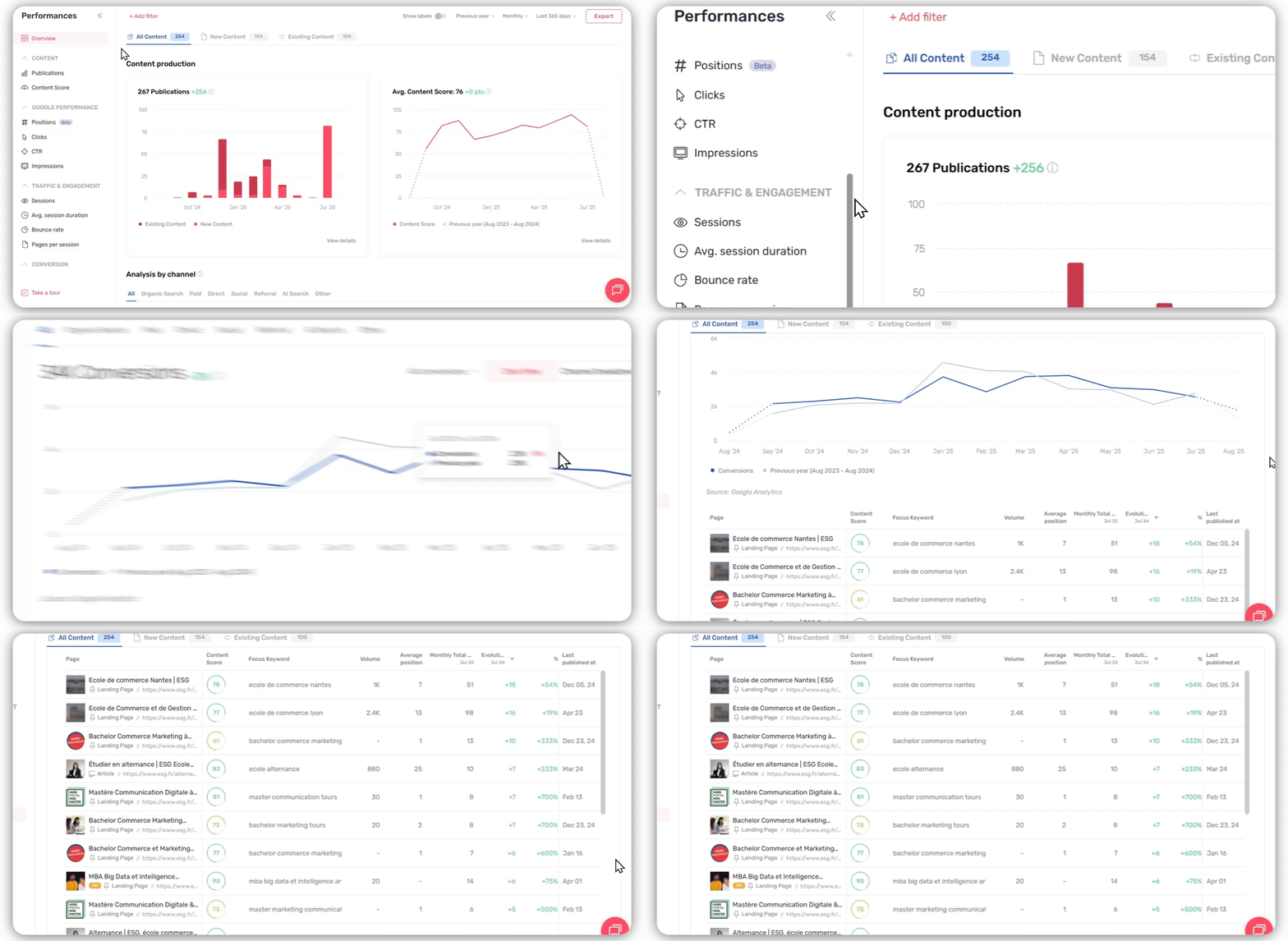
**Analysis example:** If your practical guides generate 3x more conversions than your news articles, reorient your editorial calendar toward more pratical content and promote these formats more.
**Recommended optimizations:** For content with high traffic but few conversions, test new call-to-actions, add contact forms, or create complementary downloadable resources.
### FAQ
**Why don't some contents display conversion data?** Conversions must be configured upstream in Google Analytics as goals or events. If you don't see data, check your Analytics configuration or consult your technical team to set up your priority goals.
**How do I interpret a conversion rate of 0.5%?** Conversion rates vary enormously depending on sectors and types of objectives. A rate of 0.5% can be excellent for a B2B quote request, but relatively low for a newsletter signup. Compare your performance to your own historical data rather than generic benchmarks.
**Can I track custom conversions specific to my business?** Yes, all conversions configured in your Analytics tool (GA4, Adobe Analytics, etc.) automatically feed into Semji. You can track custom objectives: session duration, page views, custom events, specific product purchases...
### Measure the complete ROI of your content strategy
You now master the complete analysis of your content performance: from attracting visitors to converting them into prospects and customers. This comprehensive approach allows you to demonstrate the business value of your work and continuously optimize your results.
**Our recommendation:** Perform this analysis monthly to identify your most profitable content. Then focus your promotional efforts and budget on these high-performing formats and topics.
**Close the loop**: You can now measure the complete impact of your content strategy, from production to revenue generation. Leverage these insights to create even more effective content.
- [Getting started with Semji](https://help.semji.com/en/getting-started-with-semji?hsLang=en#main-content)
- [Create your account and log in](https://help.semji.com/en/getting-started-with-semji?hsLang=en#create-your-account-and-log-in)
- [Identifying opportunities](https://help.semji.com/en/identifying-opportunities?hsLang=en#main-content)
- [Identify opportunities](https://help.semji.com/en/identifying-opportunities?hsLang=en#identify-opportunities)
- [Exploring your pages in Semji](https://help.semji.com/en/identifying-opportunities?hsLang=en#exploring-your-pages-in-semji)
- [Managing your editorial planning](https://help.semji.com/en/managing-your-editorial-planning?hsLang=en#main-content)
- [Adapting the planning to your production workflow](https://help.semji.com/en/managing-your-editorial-planning?hsLang=en#adapting-the-planning-to-your-production-workflow)
- [Understanding the planning view](https://help.semji.com/en/managing-your-editorial-planning?hsLang=en#understanding-the-planning-view)
- [Optimizing and publishing content](https://help.semji.com/en/optimizing-and-publishing-content?hsLang=en#main-content)
- [Prepare & write](https://help.semji.com/en/optimizing-and-publishing-content?hsLang=en#prepare-write)
- [Optimize for SEO](https://help.semji.com/en/optimizing-and-publishing-content?hsLang=en#optimize-for-seo)
- [Update & publish](https://help.semji.com/en/optimizing-and-publishing-content?hsLang=en#update-publish)
- [Optimize for GEO](https://help.semji.com/en/optimizing-and-publishing-content?hsLang=en#optimize-for-geo)
- [AI+ Agents](https://help.semji.com/en/ai-agents?hsLang=en#main-content)
- [Getting Started & Guides](https://help.semji.com/en/ai-agents?hsLang=en#getting-started-guides)
- [Pre-configured Agents](https://help.semji.com/en/ai-agents?hsLang=en#pre-configured-agents)
- [Advanced Use Cases](https://help.semji.com/en/ai-agents?hsLang=en#advanced-use-cases)
- [Maximize your efficiency with AI](https://help.semji.com/en/maximize-your-efficiency-with-ai?hsLang=en#main-content)
- [Setting up your AI environment](https://help.semji.com/en/maximize-your-efficiency-with-ai?hsLang=en#setting-up-your-ai-environment)
- [Generate content with AI](https://help.semji.com/en/maximize-your-efficiency-with-ai?hsLang=en#generate-content-with-ai)
- [Track and analyze your competitors](https://help.semji.com/en/track-and-analyze-your-competitors?hsLang=en#main-content)
- [SEO](https://help.semji.com/en/track-and-analyze-your-competitors?hsLang=en#seo)
- [GEO](https://help.semji.com/en/track-and-analyze-your-competitors?hsLang=en#geo)
- [Track and analyze your performance](https://help.semji.com/en/track-and-analyze-your-performance?hsLang=en#main-content)
- [Understanding performance metrics](https://help.semji.com/en/track-and-analyze-your-performance?hsLang=en#understanding-performance-metrics)
- [Managing your SEO performance](https://help.semji.com/en/track-and-analyze-your-performance?hsLang=en#managing-your-seo-performance)
- [Connecting your tools](https://help.semji.com/en/connecting-your-tools?hsLang=en#main-content)
- [SSO & authentication](https://help.semji.com/en/connecting-your-tools?hsLang=en#sso-authentication)
- [Connect analytics & GSC](https://help.semji.com/en/connecting-your-tools?hsLang=en#connect-analytics-gsc)
- [CMS Integration](https://help.semji.com/en/connecting-your-tools?hsLang=en#cms-integration)
- [Semji & your CMS](https://help.semji.com/en/connecting-your-tools?hsLang=en#semji-your-cms)
- [Semji extension](https://help.semji.com/en/connecting-your-tools?hsLang=en#semji-extension)
- [Semji API](https://help.semji.com/en/connecting-your-tools?hsLang=en#semji-api)
- [Administration & global preferences](https://help.semji.com/en/administration-global-preferences?hsLang=en#main-content)
- [Users & roles](https://help.semji.com/en/administration-global-preferences?hsLang=en#users-roles)
- [Languages & general preferences](https://help.semji.com/en/administration-global-preferences?hsLang=en#languages-general-preferences)
- [Resources & Webinars](https://help.semji.com/en/resources-webinars?hsLang=en#main-content)
- [Webinar 2025](https://help.semji.com/en/resources-webinars?hsLang=en#webinar-2025)
- [Assistance & FAQs](https://help.semji.com/en/assistance-faqs?hsLang=en#main-content)
- [Data privacy & security](https://help.semji.com/en/assistance-faqs?hsLang=en#data-privacy-security)
- [Frequently Asked Questions](https://help.semji.com/en/assistance-faqs?hsLang=en#frequently-asked-questions)
[](http://semji.com?hsLang=en)
[mailto:email@email.com](mailto:email@email.com)
Copyright © 2026, Semji